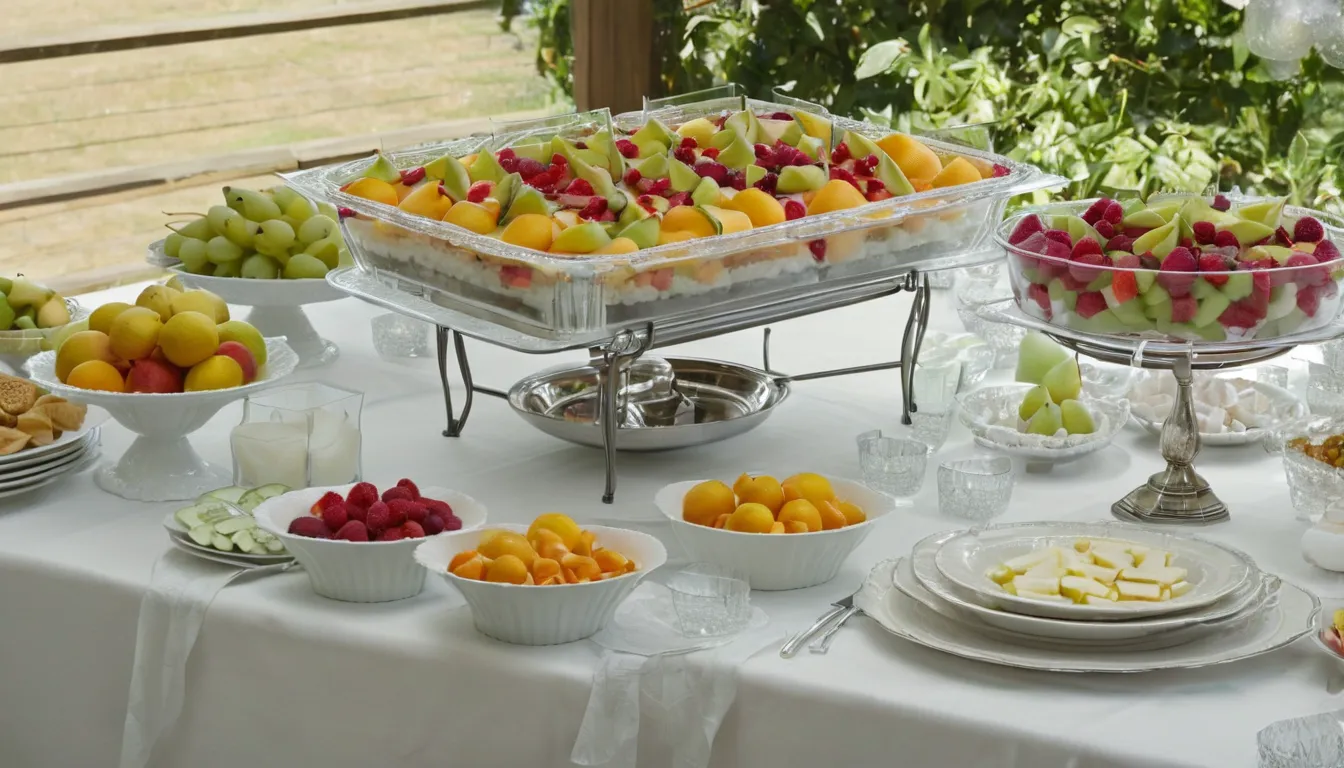
This page is a general summary of public US food safety guidance. For anything specific, including people at higher risk such as pregnant guests, young children, older adults and people with weakened immune systems, check the official sources at the bottom of the page.
The temperature zone to avoid
US food safety agencies advise that bacteria grow fastest between 40°F and 140°F. Food safety guidance calls this range the danger zone. The aim on a buffet is to keep food out of that range as much as you can: hot food at 140°F or above and cold food at 40°F or below.
The two-hour rule
Perishable food should not sit at room temperature for more than two hours. If it is hotter than 90°F, as at an outdoor summer party, the limit drops to one hour. After that, the guidance is to throw the food away. Reheating does not make it safe again, because some bacteria produce toxins that heat doesn't destroy.
The easiest way to keep track is to put out smaller dishes and replace them, rather than one huge platter at the start. Note the time when each dish goes out, on a sticky note under the dish if that helps.
Keeping hot food hot
- Cook food to a safe internal temperature first, checked with a food thermometer. Official charts list the right figure for each type of food.
- Hold hot dishes at 140°F or above in chafing dishes, slow cookers or warming trays.
- Keep some of each dish in a warm oven and swap it in, so food on the table turns over regularly.
- Don't add fresh food to a dish that has been sitting out. Use a clean dish for the new batch.
Keeping cold food cold
- Keep salads, dips, cut fruit and anything made with dairy or mayonnaise in the fridge until the last moment.
- On the table, nest serving bowls in larger bowls or trays of ice, and drain and refill the ice as it melts.
- Keep cold food out of direct sun, and keep coolers in the shade at outdoor events.
Clean habits at the table
- Wash your hands before handling food, and set out hand sanitizer or a place to wash for guests.
- Give every dish its own serving utensil so allergens and germs don't travel between dishes.
- Put out plenty of plates so guests take a clean one for second helpings.
- Keep raw meat well away from ready-to-eat food on grills and in the kitchen, with separate boards and tongs.
Leftovers
Food that sat out within the time limit can be refrigerated. Food that sat out longer should be thrown away. Put leftovers in shallow containers so they cool quickly, and get them into a fridge set at 40°F or below. When you reheat leftovers, the guidance is to bring them to 165°F, checked with a thermometer.
Official sources
These agencies publish the current advice, including safe cooking temperature charts and guidance for people at higher risk. Local health departments can also answer questions about events in public or rented spaces.
- FoodSafety.gov, the US government's food safety portal
- USDA Food Safety and Inspection Service, for meat, poultry and egg handling
- US Food and Drug Administration, for food allergens and labeling